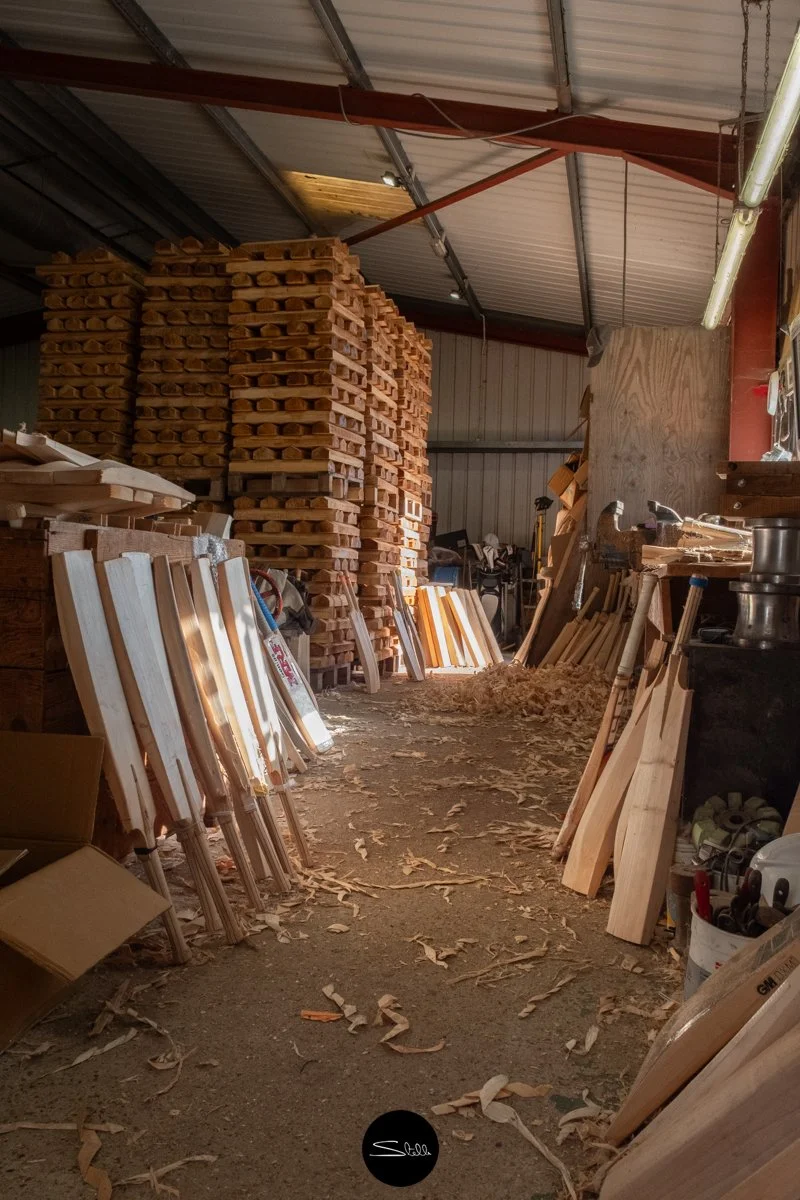
Keeley Cricket Bat Factory where the magic happens.
On a beautiful sunny morning back in February I was thrilled to visit a cricket bat factory to learn how cricket bats are made. Not just any cricket bat factory but Keeley Cricket – where premium cricket bats are handmade for international pros and discerning club cricketers alike.
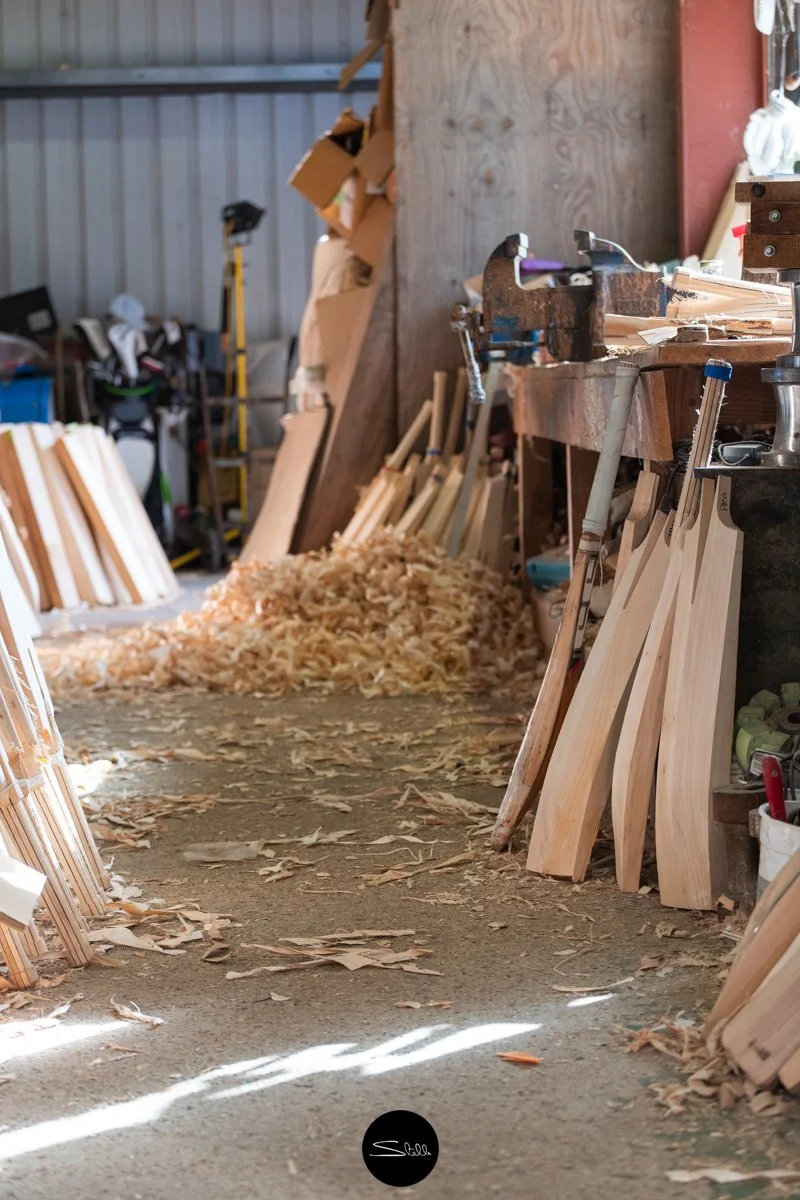
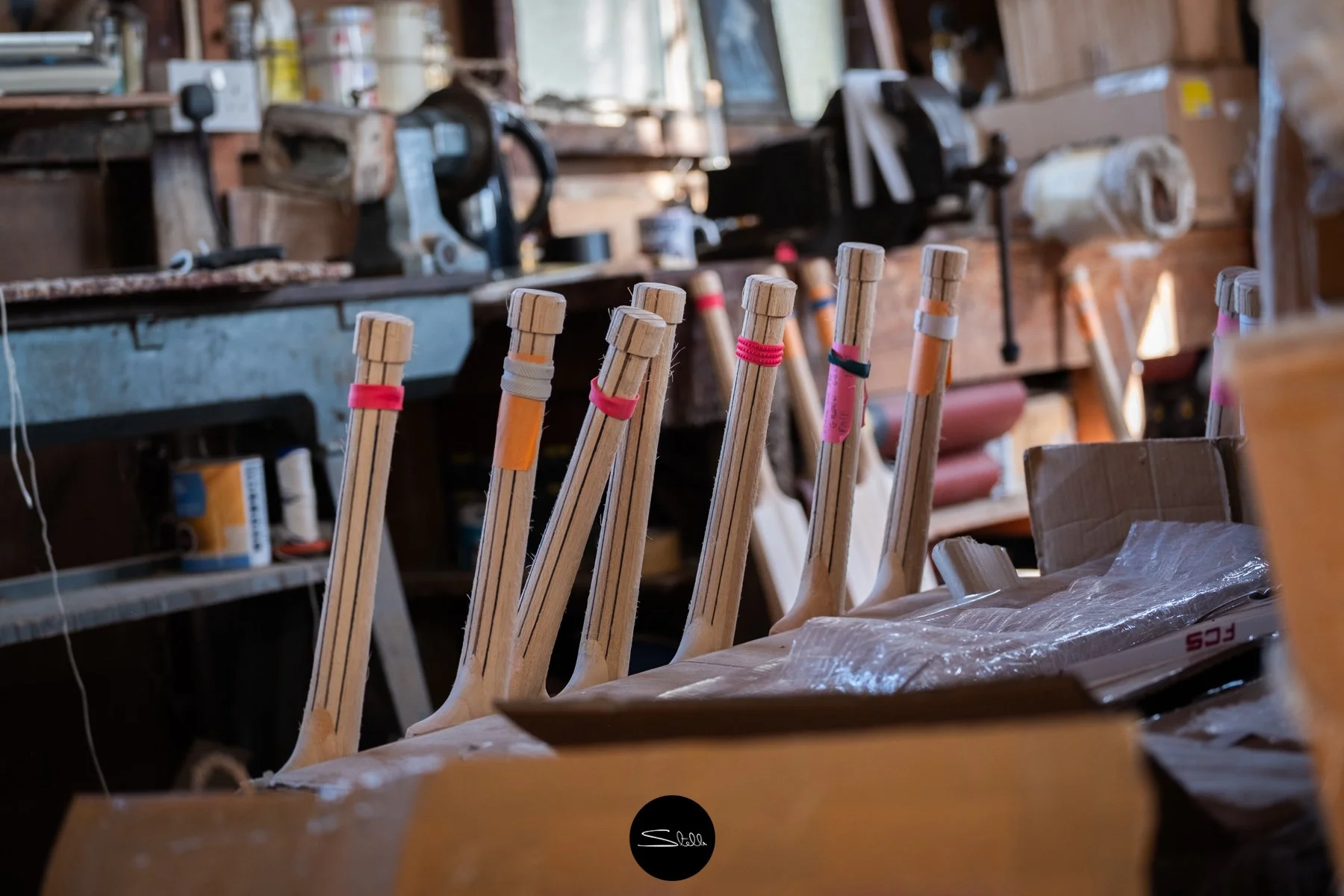
I have always been fascinated by how things are made – from the processes involved to the craftspeople and the skills they develop over time. As soon as I stepped into the factory I was greeted by the scent of raw timber and an array of bats in various stages of production surrounded by the coiled remnants of freshly cut willow bathed in the morning sunlight.
I knew this was going to be a fascinating day and I wasn’t disappointed. Let me tell you more…
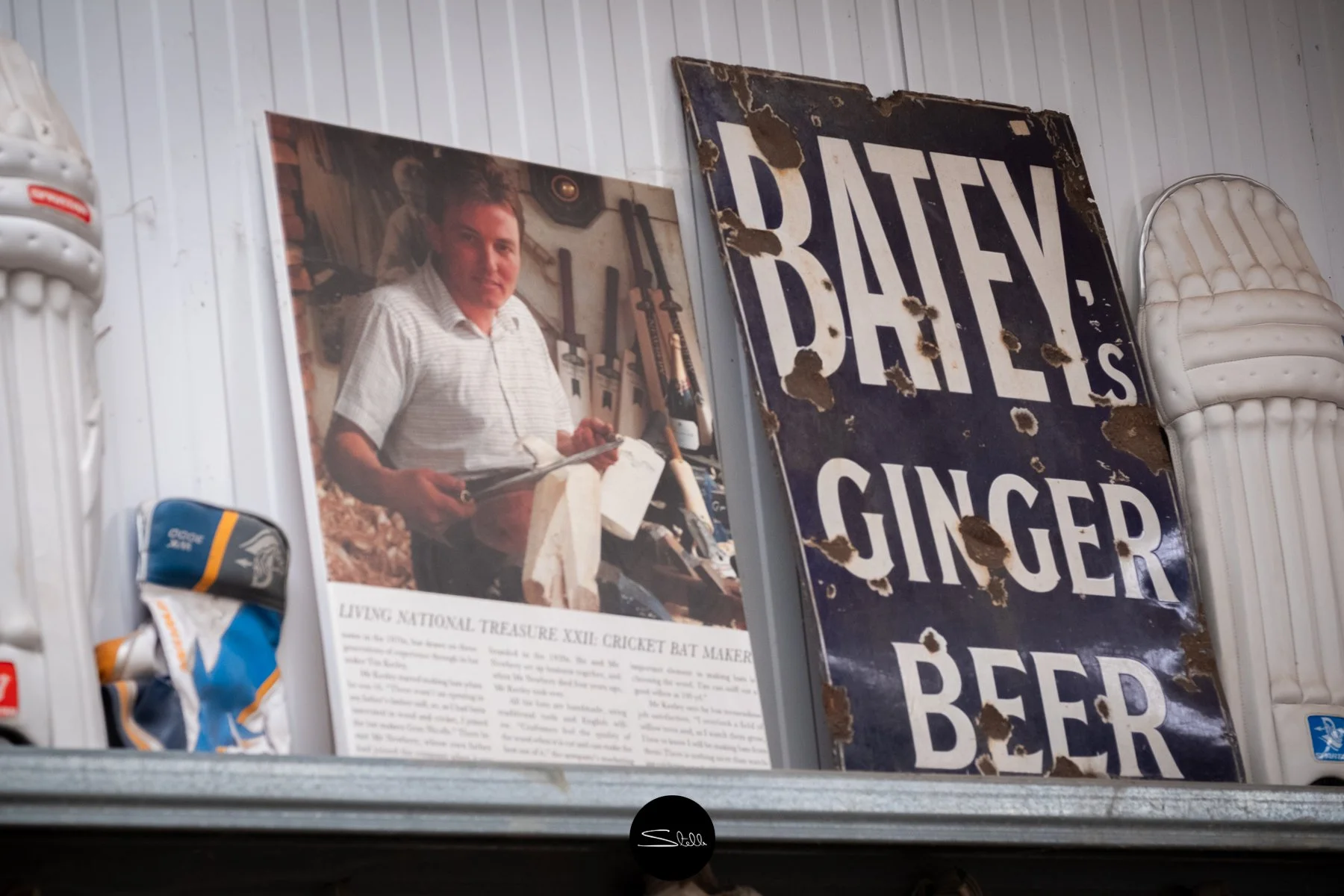
The business is led by Tim Keeley – a master bat maker who began his journey as an apprentice at Gray-Nicolls in 1975. The passion Tim exudes for his craft and his customers is evident from the warmth of the stories he tells about his 50 year career for the craft of cricket bat making.
Few names carry the weight of heritage and hands-on expertise like Keeley. Based in the picturesque village of Ashburnham, East Sussex. Keeley Cricket is a family-run business that embodies the "workshop" tradition of English bat-making. The Keeley family has lived on this land for over 200 years – the last four generations worked on the family timber mill. Apparently wood is in their blood.
Keeley isn't just a brand, it’s a masterclass in longevity.
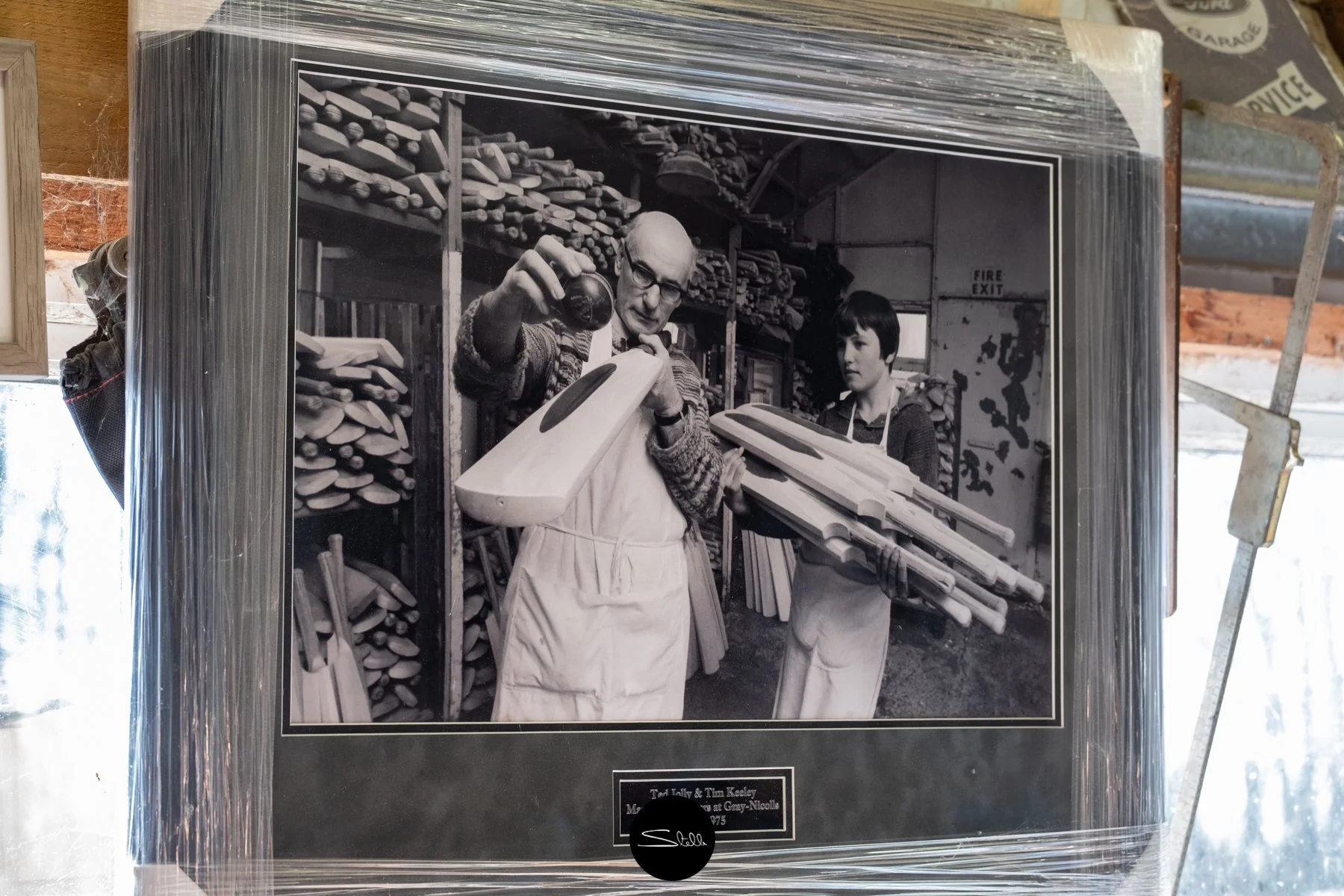
Ted Jolly & 16 year old Tim Keeley - Master Bat Makers at Gray - Nicolls May 1975
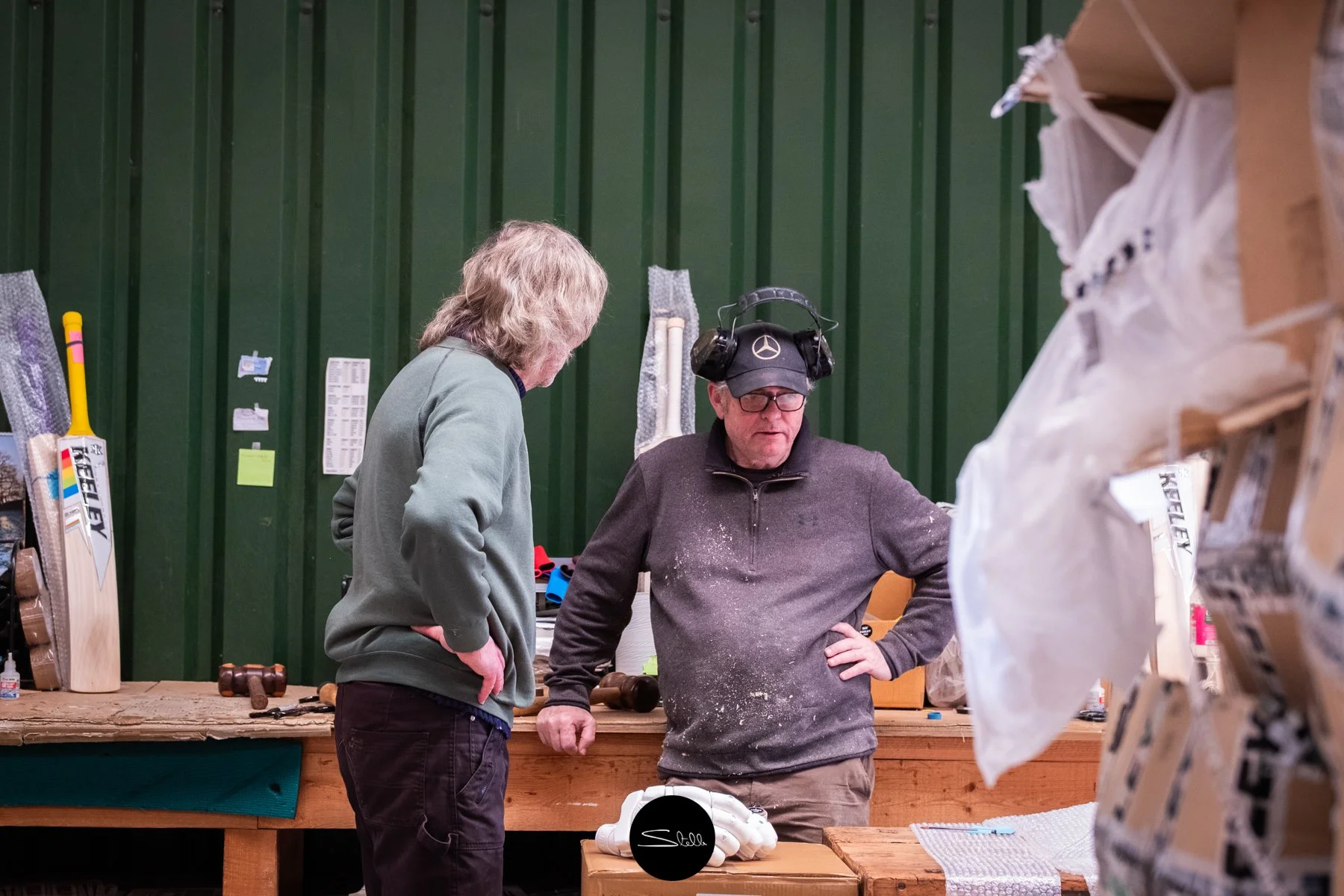
Tim led my tour of the factory and told me he worked under the legendary John Newbery and has personally handcrafted over 500,000 bats throughout his career. The team includes Tim’s brothers, Nick (a willow specialist) and Fred (sawmill expert), and his children. Tim’s daughter Keira handles customer service, orders, and social media. Keira is very efficient and engaging and does a great job making sure everything runs smoothly behind the scenes and is the first point of contact for customers. Heston, Tim’s younger son assists with buffing, sanding, and preparing clefts, while also learning the art of bat shaping and finishing – following in his father’s footsteps.
While mass-produced bats often feel "dead" or require massive break-in periods, Keeley bats are known for their exceptional "ping" right out of the box.
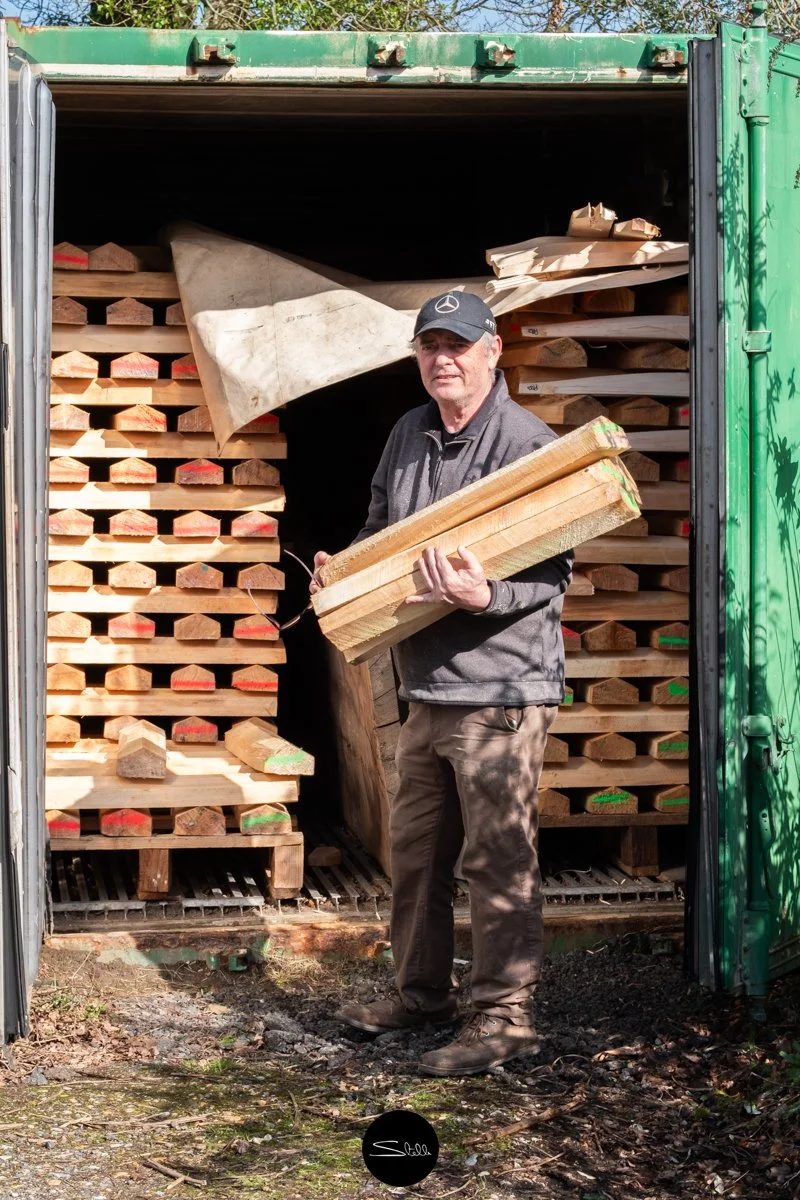
Nick Keeley collecting from the kiln.
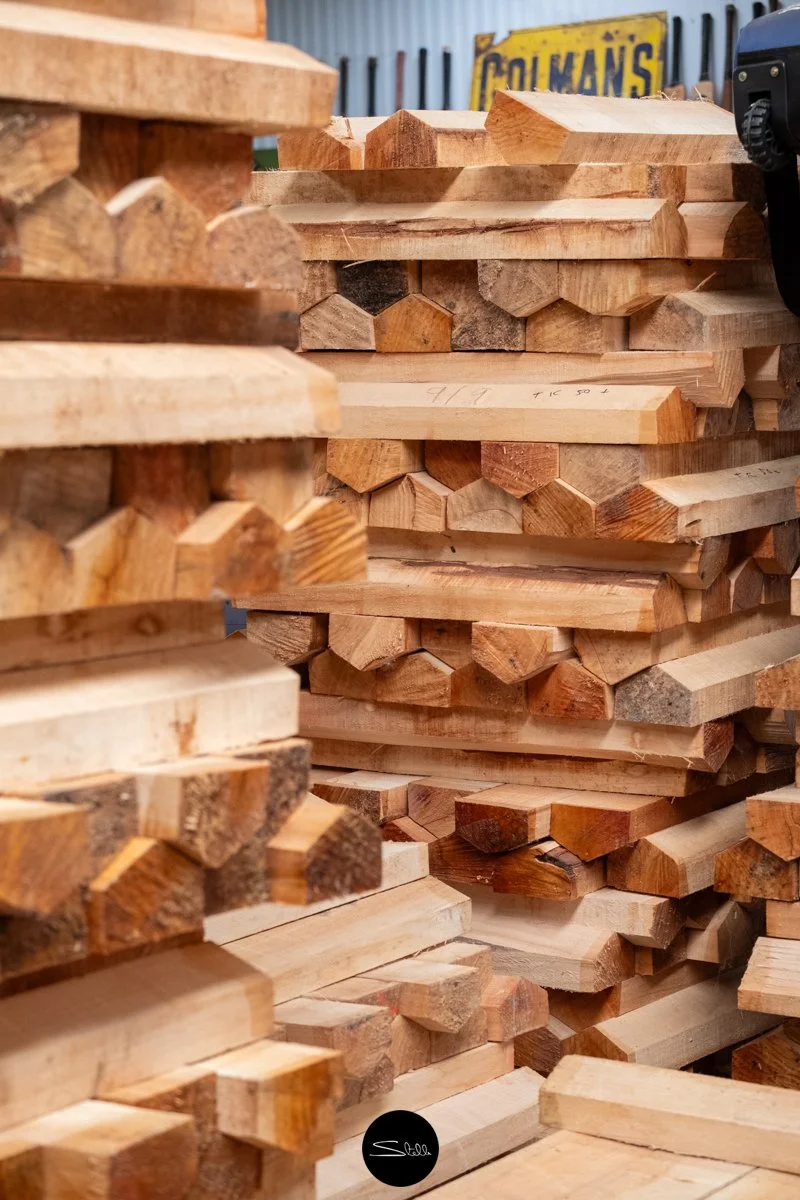
Nick Keeley hand-selects every cleft, drawing on 40 years of experience to identify wood with the best performance potential.
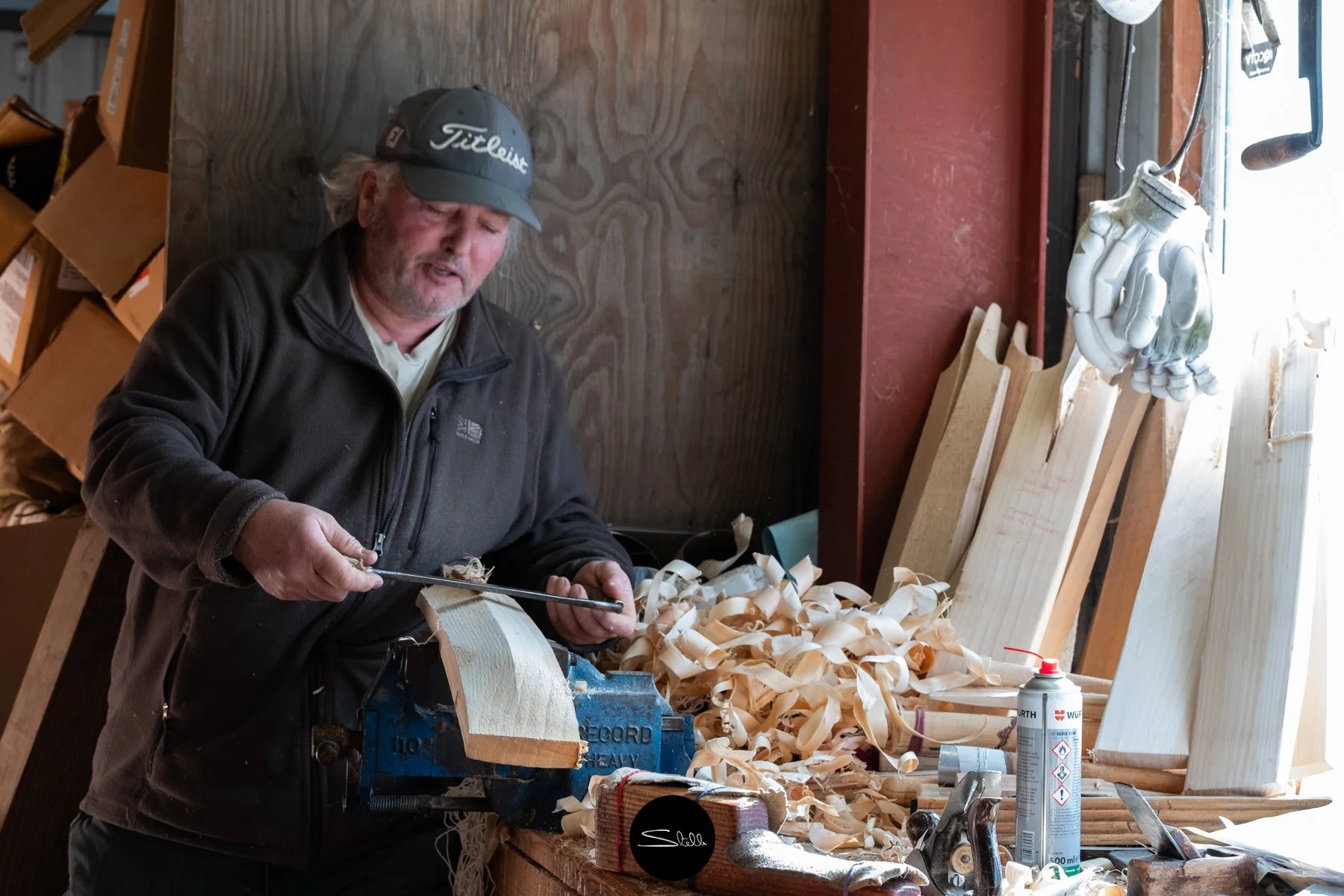
Whilst talking to Tim he explained a unique triple-pressing technique. This ensures the willow is condensed perfectly to provide maximum power without sacrificing the "feel" or longevity of the bat.
Every bat is sanded, buffed, and polished by hand to perfection. How neat is that!
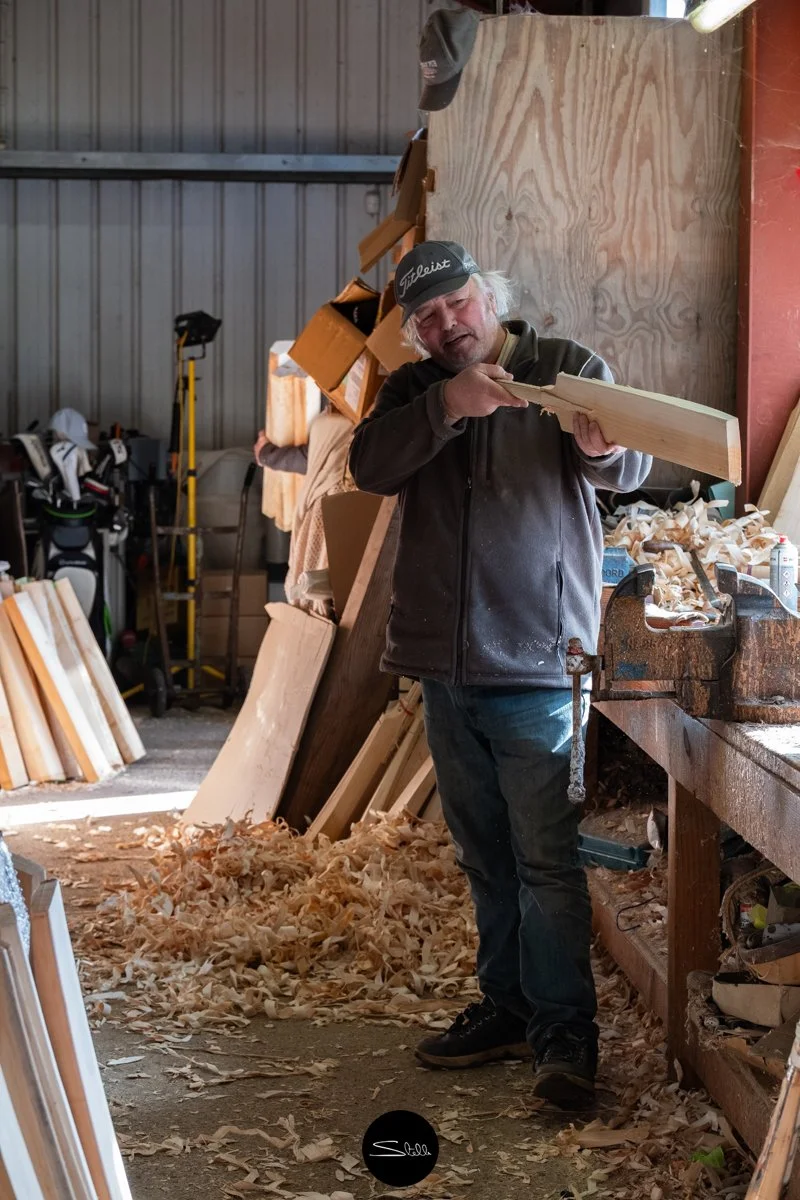
Tim inspecting a bat he has shaped. Each one hand crafted to perfection.
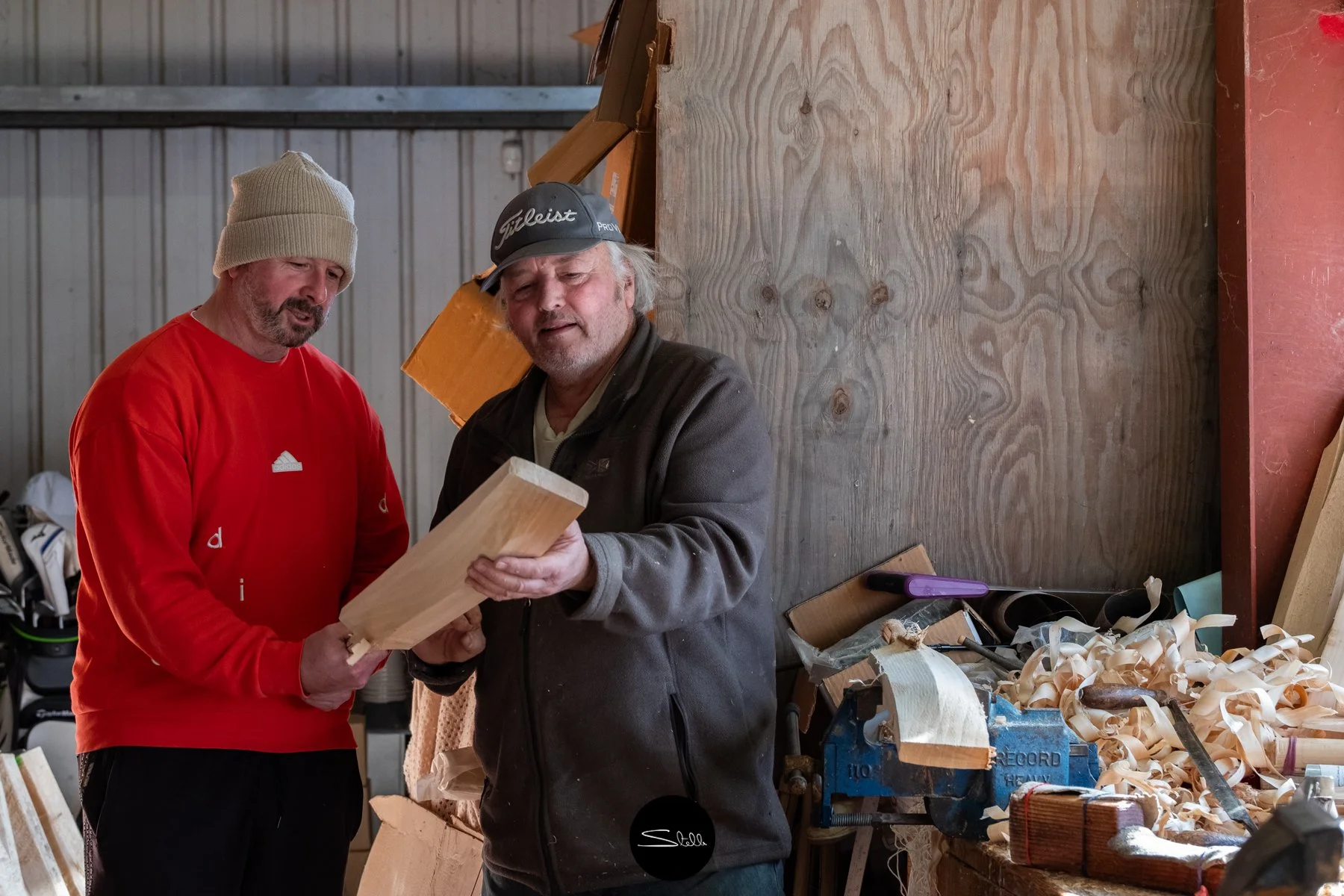
Cricketer Darren Stevens calls in to see Tim and to commission a bat or two.
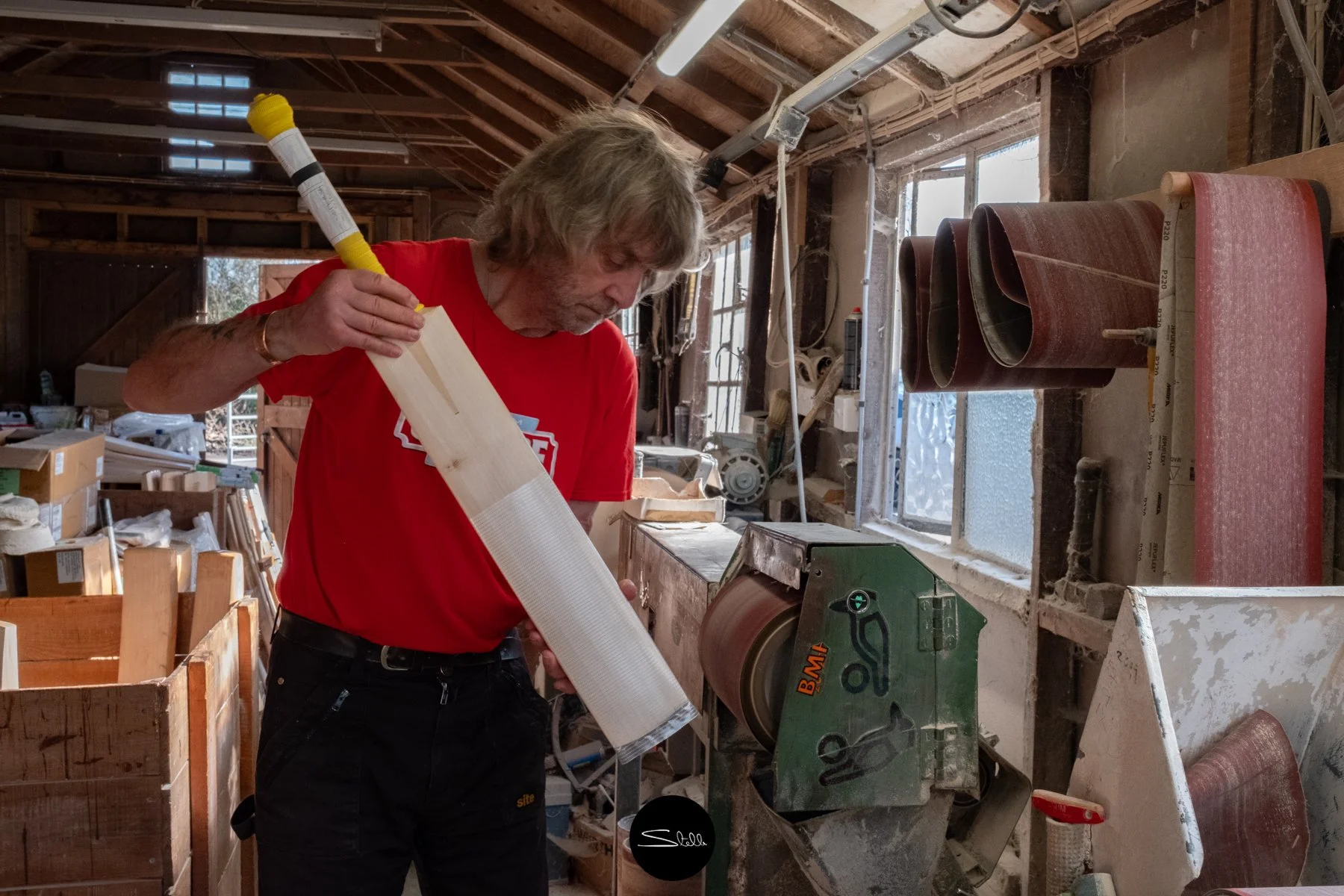
Timmy Bayne working on the finishing of a bat.
Timmy Bayne is the customer service man, having worked and managed many cricket shops in the UK over the last 45 years. Alongside working the shops he has been a highly recommended cricket coach for many years for Sussex, Surrey, Kent and numerous schools. If Timmy can't find your perfect bat, no one can.
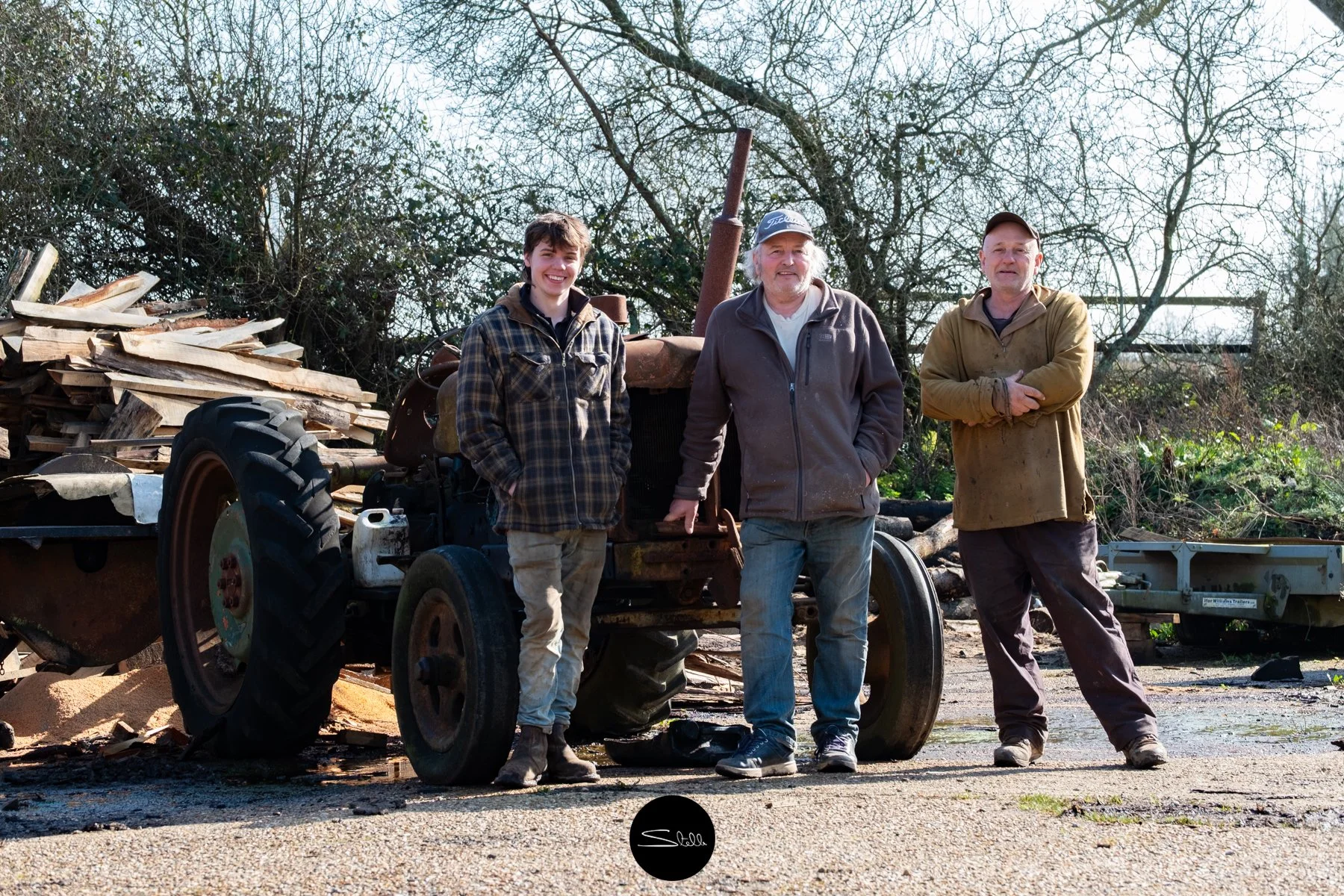
Tim with younger brother Fred (right) who manages the saw mill and Tim’s eldest son Vincent (left) who helps out at the family saw mill posing in front of a prized tractor.
Tim is very proud of his family history and the business he has built. He is surrounded by people who are just as passionate about the industry and the willow they grow. He explained how they have to think years in advance to plant the willow trees as sapling for felling in years to come and how sometimes these can be wiped out by environmental changes. It’s not just a financial loss, it’s years of cultivation gone too.
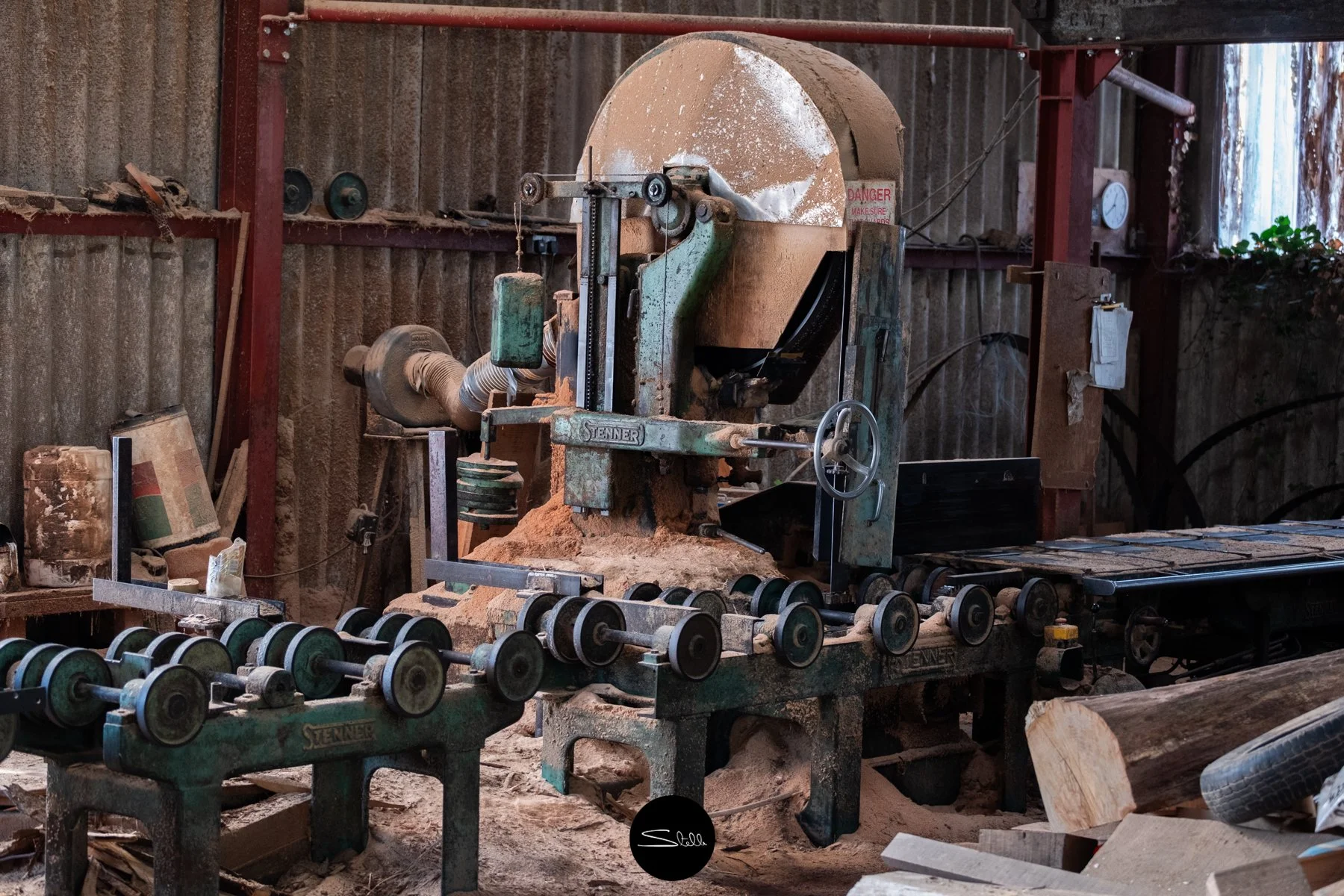
The saw mill on the land where it all began.
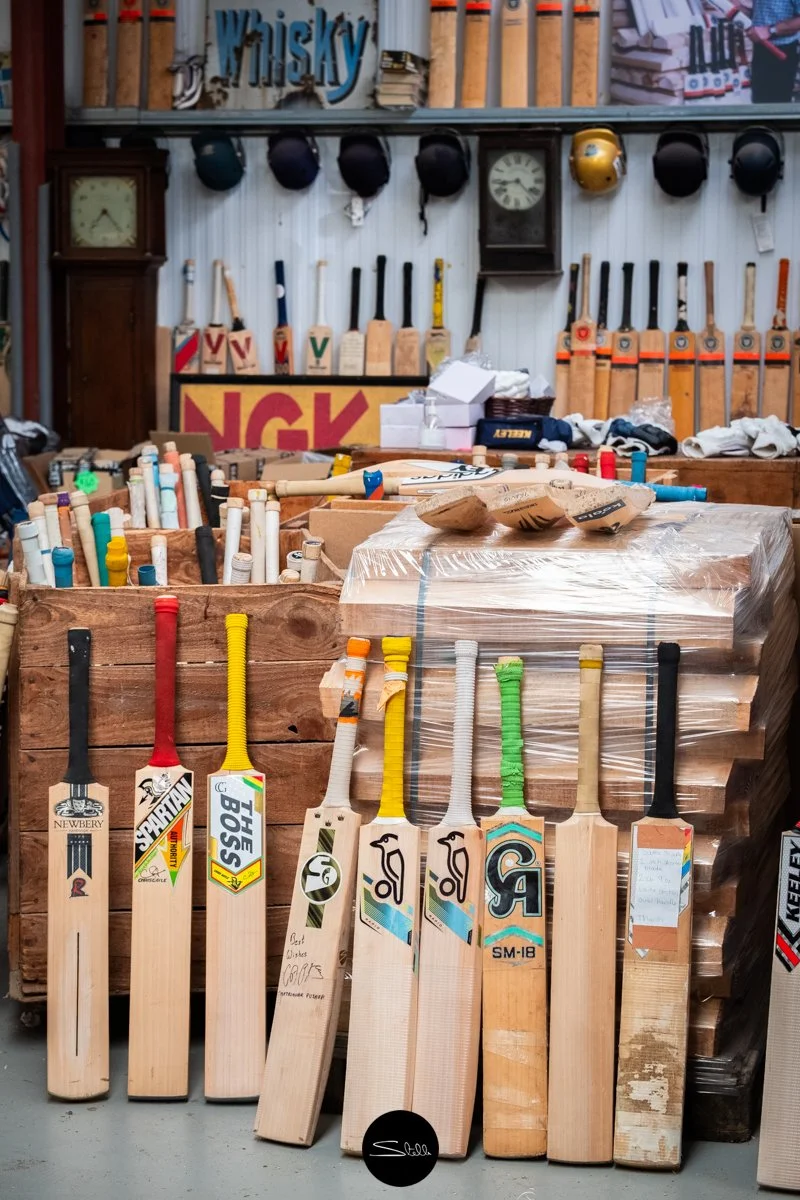
A wonderful array of memorabilia.
Whilst I was hearing about the different stages of production the experience felt vibrant and alive with enthusiasm. As crazy as it might sound it was as if the bats were longing to be placed in a pair of loving hands. Each one tailor made for its recipient. How cool is that?
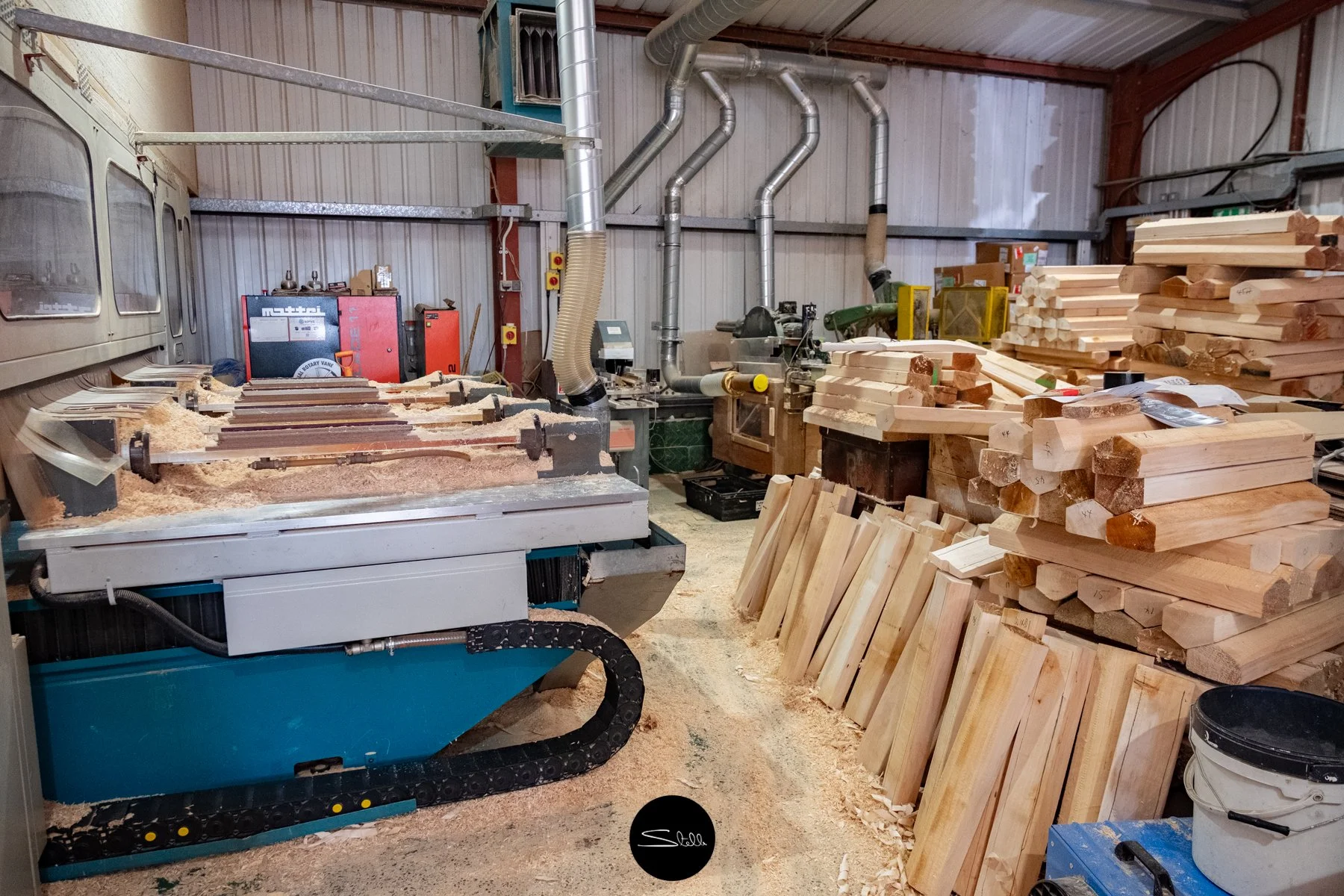
The smell of freshly sawn willow was divine.
Below a selection of images to share.
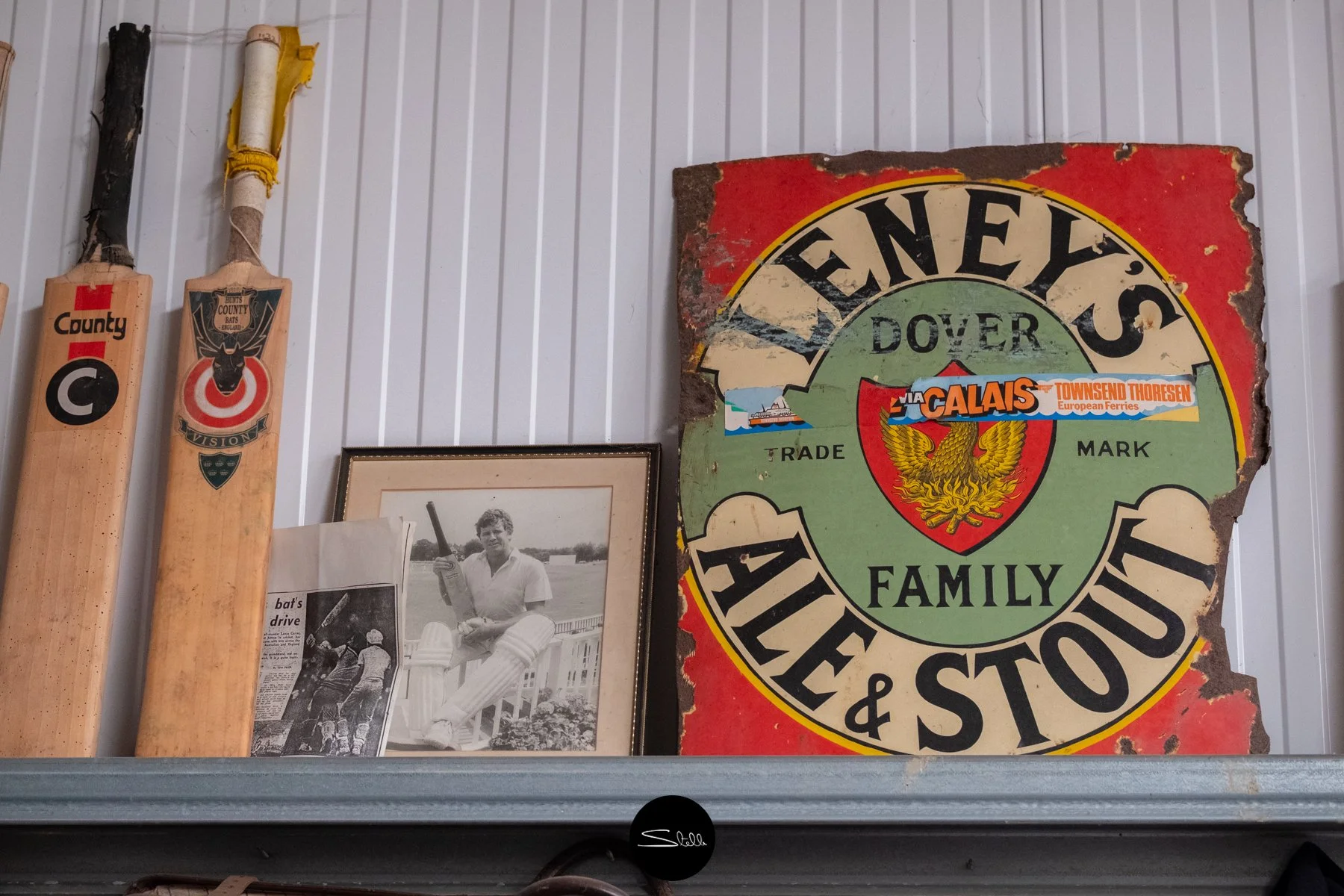
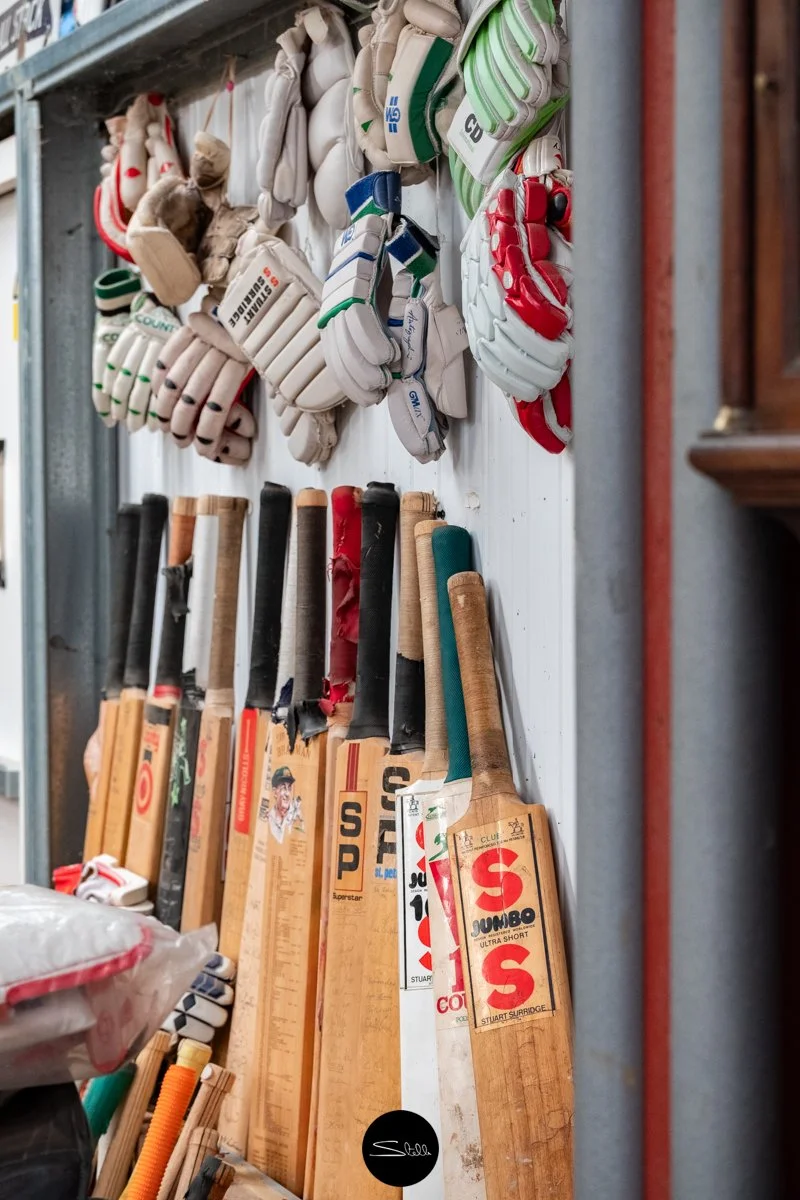
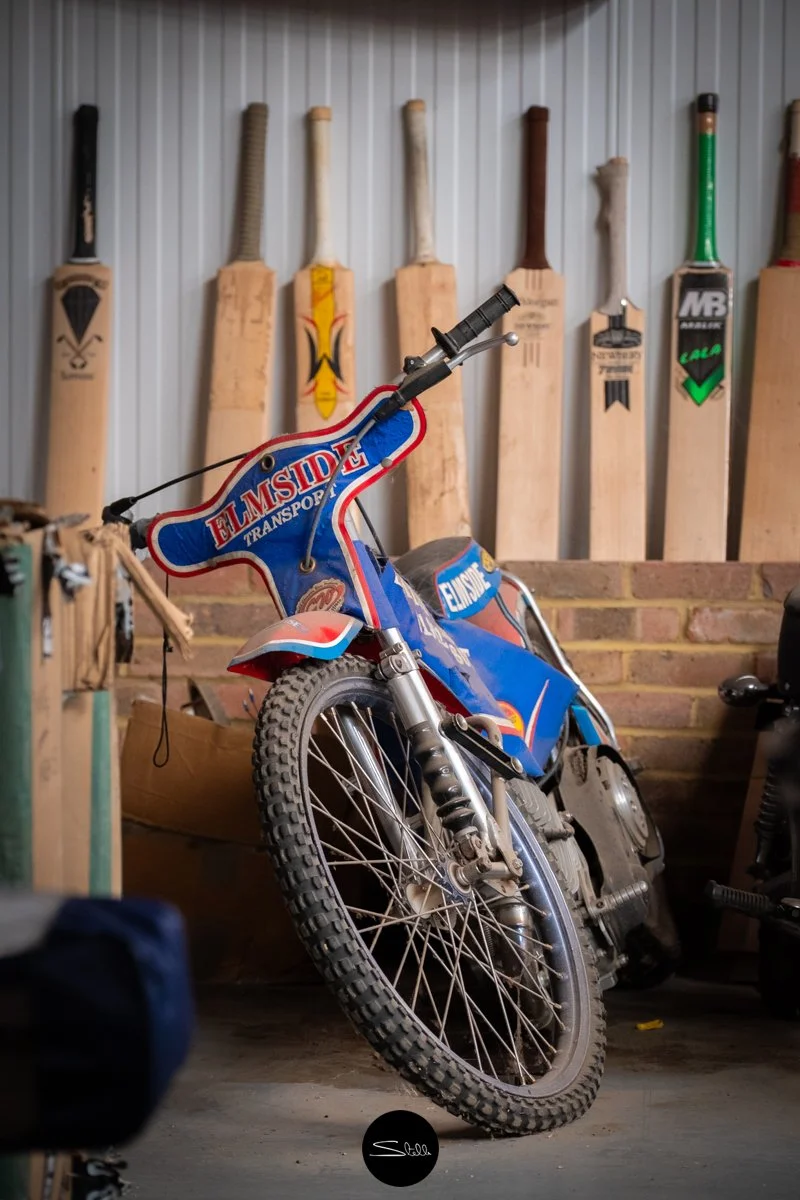
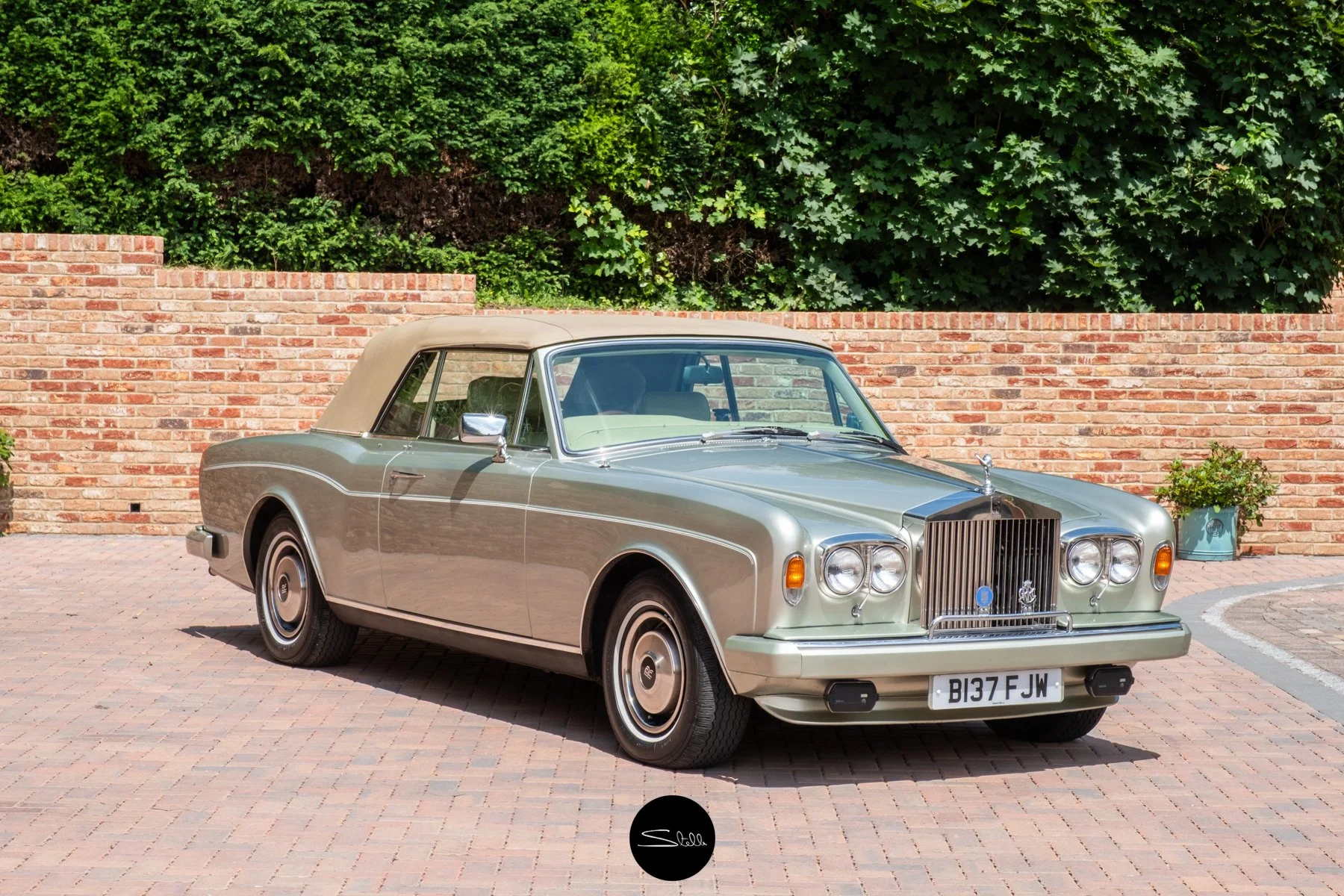
Tim’s passion for bikes and cars is evident within the factory as a number of his prized collection are interspersed around the cricketing memorabilia.
We spent time talking about this shared passion. Watch this space for a collaboration along the way!
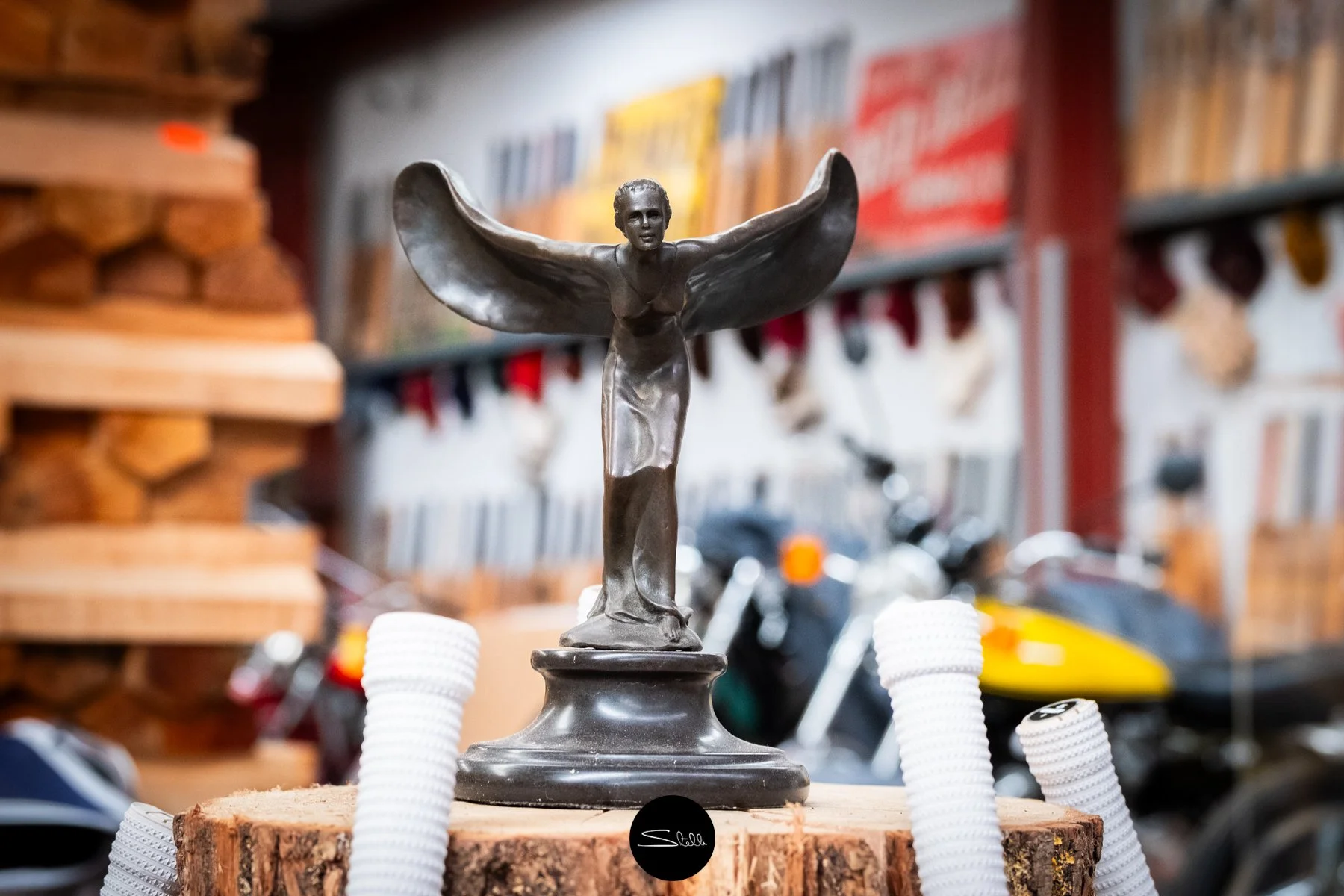
Thank you so much to Tim and his team for a fascinating tour. I found it inspiring and educational. I have just loved taking the photographs and sharing my experience within this blog.
Keeley Cricket is open to the public Wednesday - Friday 9am - 4pm and Saturday 9am - 12pm. For enquiries contact Keira on info@keeleycricket.com
I hope you have enjoyed reading this blog about Keeley Cricket as much as I have writing it. This link takes you to their website.
Do you have a business or brand you would like photographed? I would love to hear from you – message or call on 07771810105.
Anyone for cricket?

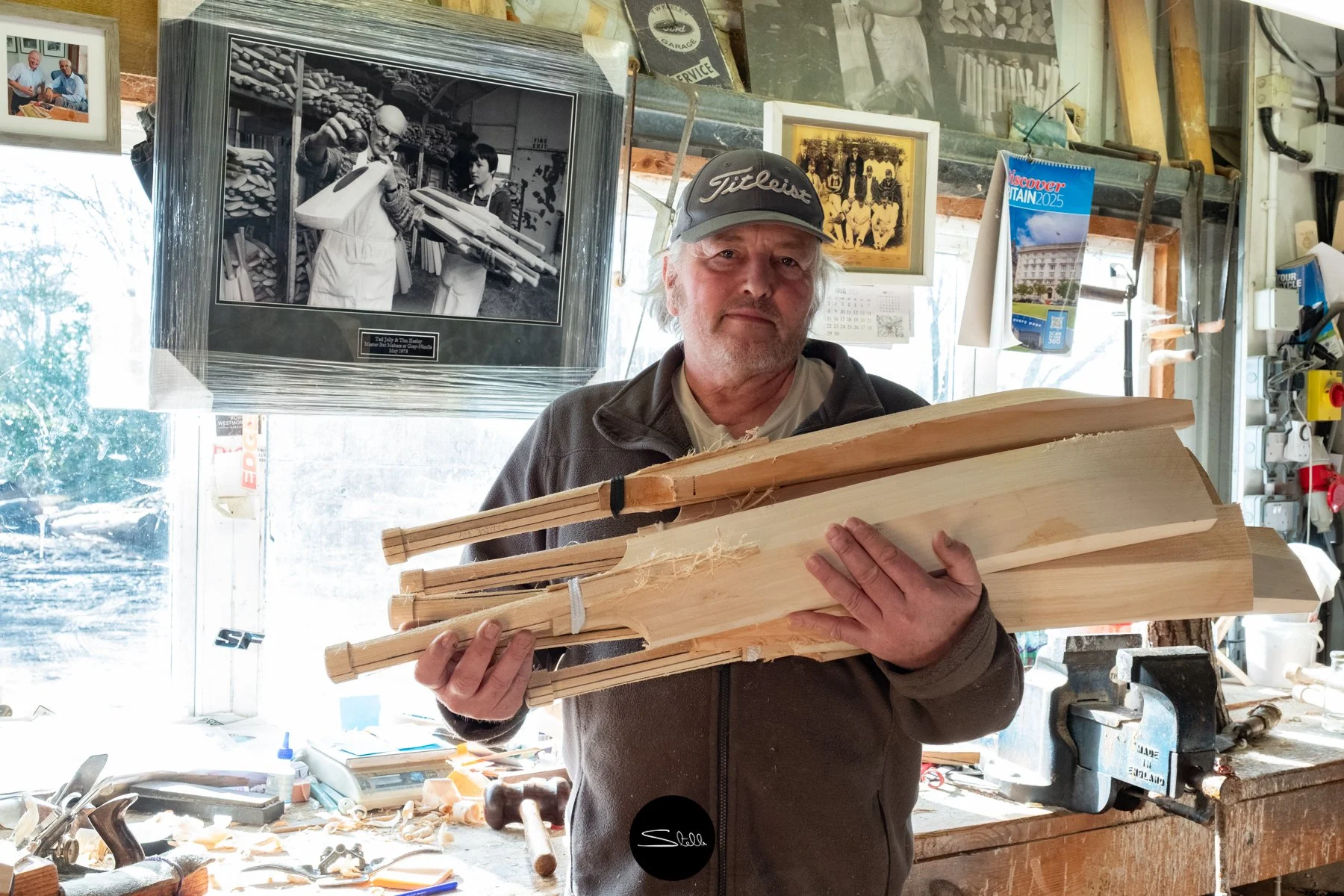
A recreation of the photograph hanging behind Tim when he was just 16 years old.